Secret Scanning That Verifies Before It Alarms
A scanner that tests whether a found key is live turns a thousand false positives into three real emergencies.
Run a pattern-based secret scanner across a mature repository and you get a thousand findings. Test fixtures, example keys, base64 blobs that happen to look like tokens, a UUID in a comment.
Nobody triages a thousand findings. They skim the first twenty, conclude it is noise, and close the tab. The scan produced zero security improvement and cost an afternoon.
Verification changes the economics
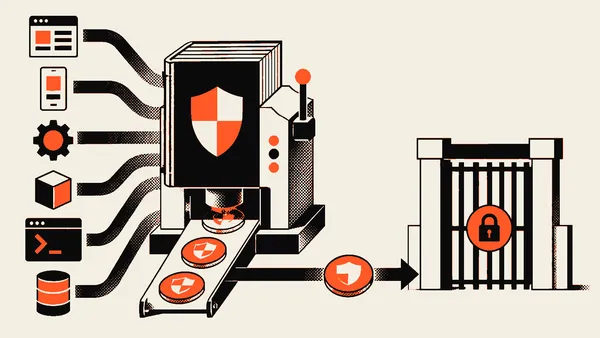
TruffleHog's distinguishing feature is that it takes a candidate credential and tries it. It calls the relevant provider's API to check whether the key is live.
A thousand findings becomes three verified, active credentials. Those three are an emergency, and now they are visible instead of buried.
trufflehog git file://. --only-verified
trufflehog github --repo=https://github.com/org/repo --only-verified--only-verified is the flag that makes the tool usable.
What verification does not tell you
An unverified finding is not automatically safe. It might be a credential for a provider without a verification check, an expired key that was live last month, or an internal system the scanner cannot test.
So: triage verified findings as incidents, and review unverified ones with judgement rather than dismissing them. The point is ordering the queue, not deleting half of it.
Where I run it
Taking over a codebase. Full history scan, before anything else. It is the fastest way to understand what a project's hygiene has been like, and it frequently changes the first conversation I have with a client.
Across an organisation. Scanning every repository an organisation owns finds the abandoned side project with production credentials in it. That repository is always there.
In CI, verified-only, as a blocking check. A live credential in a pull request should stop the pipeline.
Reporting it to a client
Be calm and specific. What was found, whether it is currently valid, what it can access, what to rotate, and in what order. Lead with the action, not the severity label.
Panicked reporting produces defensive clients. A short list with clear steps produces a rotated key within the hour, which is the actual goal.
Resources
- Repo: trufflesecurity/trufflehog
- Video walkthroughs: YouTube: TruffleHog tutorial
- Prevention side: Gitleaks pre-commit
Need this built properly?
I build secure, fast, bilingual platforms for clients across Egypt, Saudi Arabia, the UAE and Kuwait.