ComfyUI: Image Generation as a Pipeline, Not a Prompt Box
Nodes and graphs look intimidating until you need the same result twice. Then they are the only sane option.
Prompt-box image generators are wonderful until a client says "same style, same lighting, forty products." Then you discover that a text box has no memory and no reproducibility.
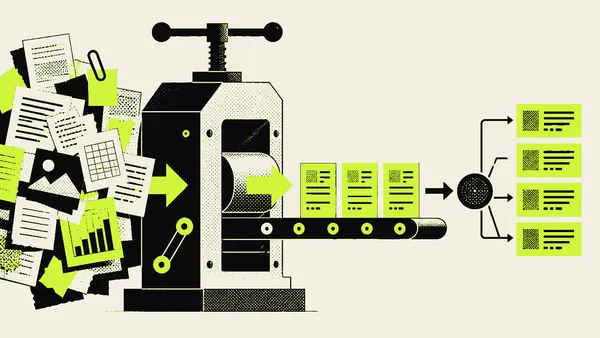
ComfyUI treats generation as a graph: load model, encode prompt, sample, upscale, save. Every step is a node you can inspect, swap, and reuse.
Why the graph is worth the learning curve
Reproducibility. The workflow is a file. Same graph plus same seed produces the same output next month, which is the only way to promise a client visual consistency across a set.
Batch operations. Swap one node for a list input and the same pipeline runs across forty products with identical treatment.
Partial reruns. Change the upscaler without re-running the expensive sampling step. On a slow machine this is the difference between iterating and waiting.
Honest debugging. When output is wrong you can see which stage produced it, instead of guessing at a prompt.
Where I have actually used it
Product imagery for the interior design catalog — consistent lighting and background treatment across a large materials library, where hiring a photographer for every swatch was not realistic.
Also texture and background generation for site design, where I need something on-brand rather than something recognisable from a stock library.
The blog covers on this site use a different pipeline — real photographs put through a duotone treatment — but the principle is the same: a repeatable process beats a lucky result.
Things to know before you install it
Custom nodes are third-party code that runs on your machine with your permissions. The ecosystem is enormous and largely unreviewed. Install from sources you can identify, and treat a node pack the way you would treat any unvetted dependency — because that is exactly what it is.
Disk usage grows fast. Checkpoints, LoRAs, upscalers and VAEs are gigabytes each, and it is easy to accumulate a hundred gigabytes without noticing.
And check the licence of any model you use commercially. "Available to download" and "licensed for client work" are different questions, and the second one is the one that matters when you invoice.
The catch
The interface is genuinely intimidating for the first hour. If you need one image, use anything else. If you need the same treatment applied fifty times, this is the tool.
Resources
- Repo: Comfy-Org/ComfyUI
- Video walkthroughs: YouTube: ComfyUI workflow tutorial
Need this built properly?
I build secure, fast, bilingual platforms for clients across Egypt, Saudi Arabia, the UAE and Kuwait.